

Long before Holmes lit his pipe at 221B Baker Street, a real-life rogue-turned-lawman was already reinventing crime-solving in the backstreets of Paris. Eugène François Vidocq, the inspiration behind Victor Hugo’s Javert and Poe’s Dupin, was a thief who became France’s first detective—and his wild life got the full Golden Age of Hollywood treatment in A Scandal in Paris (1946). In this installment of Beyond Baker Street, we meet the charming criminal who out-Holmesed Holmes before Sherlock even existed.
Beyond Baker Street XII
The French Criminologist
A Scandal in Paris
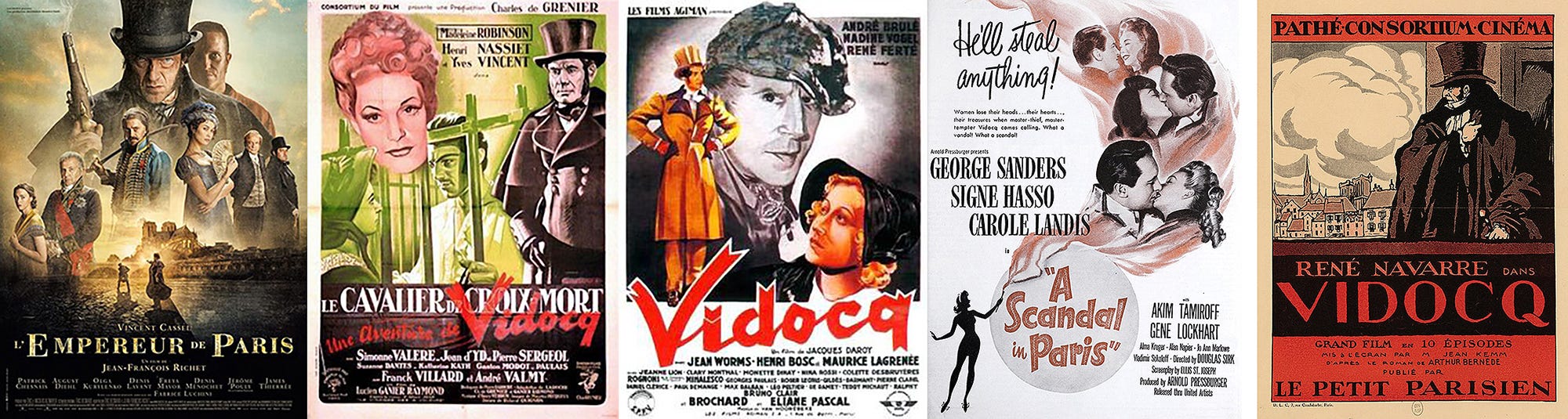
Before Arthur Conan Doyle and Sherlock Holmes there was Vidocq. Eugène François Vidocq was a historical figure who has inspired numerous stories and films based on his memoirs. About the man, Wikipedia states:
Eugène-François Vidocq was a French criminal turned criminalist, whose life story inspired several writers, including Victor Hugo, Edgar Allan Poe, and Honoré de Balzac. He was the founder and first director of France’s first criminal investigative agency, the Sûreté Nationale, as well as the head of the first known private detective agency. Vidocq is considered to be the father of modern criminology and of the French national police force. He is also regarded as the first private detective.
That’s quite a resume. With that in mind, it’s not so surprisingly that Vidocq’s memoirs have been adapted for film on numerous occasions. One of the more popular films was A Scandal in Paris (1946), directed by Douglas Sirk, and starring George Sanders as Vidocq. The film focusses on Vidocq’s early career as a gentleman thief.
In a Parisian prison and a woman gives birth to a baby boy—however, his father’s name is not recorded on the birth certificate. The boy grows up to be a petty thief (George Sanders) who adopts numerous identities as he steals what he needs to get by. As the story begins, the thief is in jail with fellow ne’er-do-well Emile Vernet (Akim Tamiroff). They escape when the jailer’s daughter smuggles in a cake with a file hidden in it. On the lam, to evade capture, they’re persuaded to join the army, using forged papers.
After the war, returning to Paris, the thief and Vernet stop by a graveyard where Marquise De Pierremont (Alma Kruger) is having trouble with her irascible pet monkey. The thief assists her and finds himself invited as a guest to her chateau. When the Marquise enquires as to his name, the thief selects a name from a nearby tomb—Vidocq—and christens himself Eugène François Vidocq.
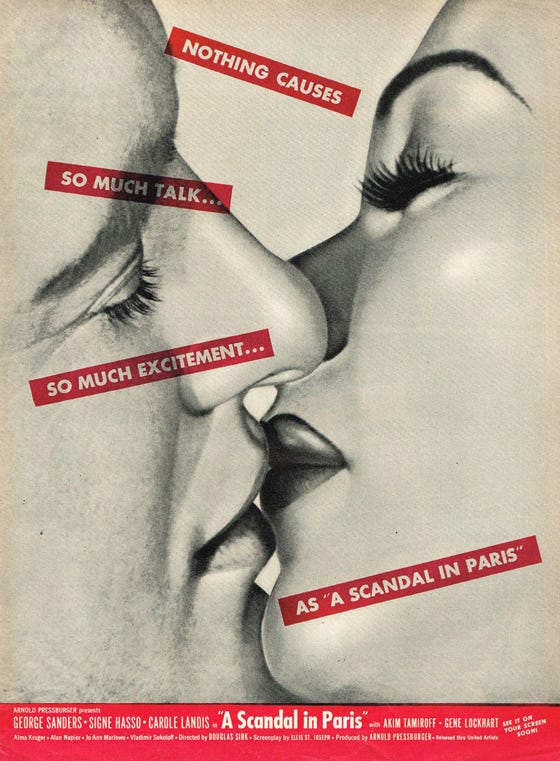
A Scandal in Paris is pure Hollywood. It features lavish sets and costumes; there’s a cute monkey for comic relief, and there’s a musical dance routine. Most importantly it features a suave debonair hero—who just happens to be a criminal, but you know he’s going to see the error of his ways before the last reel. It’s the type of film they did so well during the Golden Age of Hollywood—it’s entertainment from first frame to last.
Beyond Baker Street
I’ve always been fascinated by the shadow cast by Sherlock Holmes—a figure so iconic that his influence seeps into unexpected corners of pop culture. Beyond Baker Street is where I chase those echoes. Whether it’s a villain who once faced Holmes or a story that feels like it should’ve, this series lets me explore the strange tributaries that flow from the great detective’s world.
If you’ve enjoyed this piece, you’ll find even more to explore in my book Baker Street: The Curious Case Files of Sherlock Holmes—a deep dive into 100+ years of Sherlock Holmes in print, film, television, and beyond. From Conan Doyle’s original stories to pastiches, parodies, and pop culture echoes, it’s a must-read for Holmes fans and curious minds alike.

Yours in the Spirit of Adventure
David Foster is an Australian best-selling author who writes under the pen names James Hopwood, A.W. Hart, and Jack Tunney. Under the latter, he has contributed three titles to the popular Fight Card series. His short fiction has been published in over 50 publications worldwide, including by Clan Destine Press, Wolfpack Publishing, and Pro Se Productions, to name but a few. In 2015, he contributed to the multi-award-winning anthology Legends of New Pulp Fiction, published by Airship 27 Publishing.
Foster’s non-fiction work appeared in the award-winning Crime Factory Magazine, as well as contributing numerous articles exploring pulp fiction in popular culture to Girl Gangs, Biker Boys, and Real Cool Cats: Pulp Fiction and Youth Culture, 1950 to 1980 (2017, PM Press) and Sticking It to The Man: Revolution and Counterculture in Pulp and Popular Fiction, 1950 to 1980 (2019, PM Press). He has also contributed articles on the ANZAC war experience to Remembrance (2024, Union Street 21).
Foster lives in the old Pentridge Prison Complex, behind high grey stone walls, in inner-suburban Melbourne, Australia.