

Before Holmes ever graced Baker Street, there was Jack Whicher—Scotland Yard’s finest, pulled into a case that gripped Victorian England and helped shape modern detective fiction. The Suspicions of Mr. Whicher, based on the true crime at Road Hill House, brings the fog-laced mystery of 1860s Britain to life with chilling accuracy. In this installment of Beyond Baker Street, David Foster traces the real roots of the analytical detective—from tragedy to television.
Beyond Baker Street VIII
The Roadhill House Murder
The Suspicions of Mr. Whicher
The influence of Sherlock Holmes in film and television extends beyond the confines of Baker Street. The shadowy streets and enigmatic characters that populate these shows echo the world of Sherlock Holmes and Dr. Watson, yet they carve out their own distinct narratives, rich in mystery and intrigue.
One such tele-movie is The Suspicions of Mr. Whicher (2011) brings to life the true-crime investigations of a Victorian-era detective, whose methods and demeanour are reminiscent of Holmes himself. This film, based on real events, bridges the gap between fact and fiction.
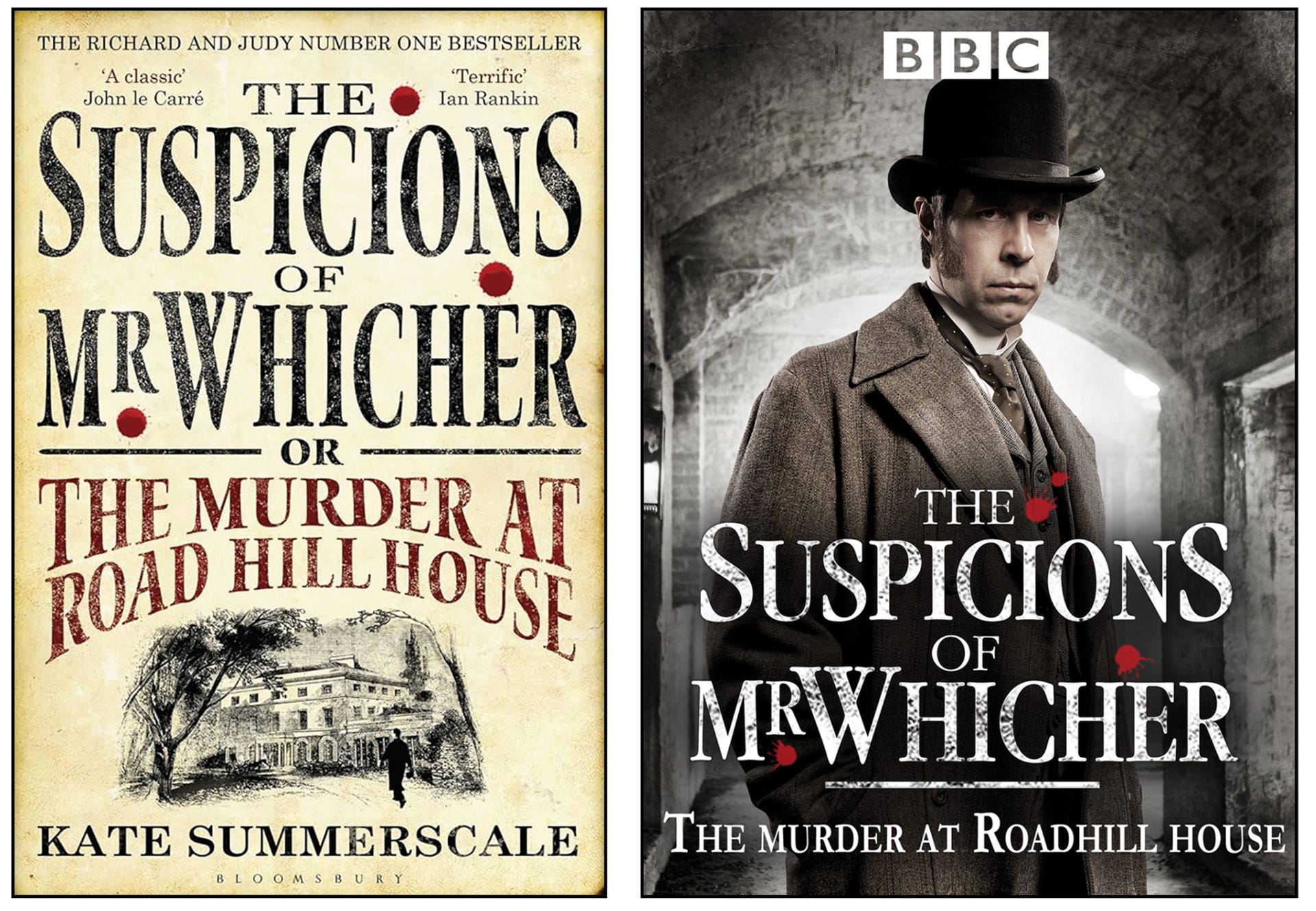
The Murder at Roadhill House is the first of four telemovies, starring Paddy Considine as Jack Whicher, based on the narrative non-fiction novel by Kate Summerscale.
Based on a true story, The Murder at Roadhill House begins in the village of Road, Wiltshire, in 1860. In a makeshift courtroom a trial is being heard, and the townsfolk have gathered to hear the verdict. When the case is dismissed for lack of evidence, Inspector Jack Whicher of Scotland Yard’s Detective Branch is disgraced, and is forced to return to London.
The story skips back two months earlier. At Road Hill House, the Kent family awaken to find that the youngest child, Savill Kent, is missing from his cot. The family and staff search the grounds looking for the boy, who is found covered in blood in the outhouse.
When the Wiltshire police are slow to find the murderer, the public is outraged. The press latch onto the story, and the case becomes a national obssession. Scotland Yard dispatches Jack Whicher, their finest detective, to take over the investigation. Whicher is not welcome in Wiltshire, and the local police do little to aid his enquiries. However, he soon realises the killer must be a member of the household, and not a member of the broader community, which makes him unpopular.
Whicher, much like Sherlock Holmes, is presented as a new breed of analytical detective; one who seeks motive and facts to support his theories, rather than unfounded suppositions. At the end of the telemovie, Whicher is no longer a detective at Scotland Yard, but a private enquiry agent.

Paddy Considine would return as Jack Whicher in three other mysteries: The Murder In Angel Lane (2013), Beyond the Pale (2014), and The Ties That Bind (2014).
Beyond Baker Street
I’ve always been fascinated by the shadow cast by Sherlock Holmes—a figure so iconic that his influence seeps into unexpected corners of pop culture. Beyond Baker Street is where I chase those echoes. Whether it’s a villain who once faced Holmes or a story that feels like it should’ve, this series lets me explore the strange tributaries that flow from the great detective’s world.
If you’ve enjoyed this piece, you’ll find even more to explore in my book Baker Street: The Curious Case Files of Sherlock Holmes—a deep dive into 100+ years of Sherlock Holmes in print, film, television, and beyond. From Conan Doyle’s original stories to pastiches, parodies, and pop culture echoes, it’s a must-read for Holmes fans and curious minds alike.

Yours in the Spirit of Adventure
David Foster is an Australian best-selling author who writes under the pen names James Hopwood, A.W. Hart, and Jack Tunney. Under the latter, he has contributed three titles to the popular Fight Card series. His short fiction has been published in over 50 publications worldwide, including by Clan Destine Press, Wolfpack Publishing, and Pro Se Productions, to name but a few. In 2015, he contributed to the multi-award-winning anthology Legends of New Pulp Fiction, published by Airship 27 Publishing.
Foster’s non-fiction work appeared in the award-winning Crime Factory Magazine, as well as contributing numerous articles exploring pulp fiction in popular culture to Girl Gangs, Biker Boys, and Real Cool Cats: Pulp Fiction and Youth Culture, 1950 to 1980 (2017, PM Press) and Sticking It to The Man: Revolution and Counterculture in Pulp and Popular Fiction, 1950 to 1980 (2019, PM Press). He has also contributed articles on the ANZAC war experience to Remembrance (2024, Union Street 21).
Foster lives in the old Pentridge Prison Complex, behind high grey stone walls, in inner-suburban Melbourne, Australia.