

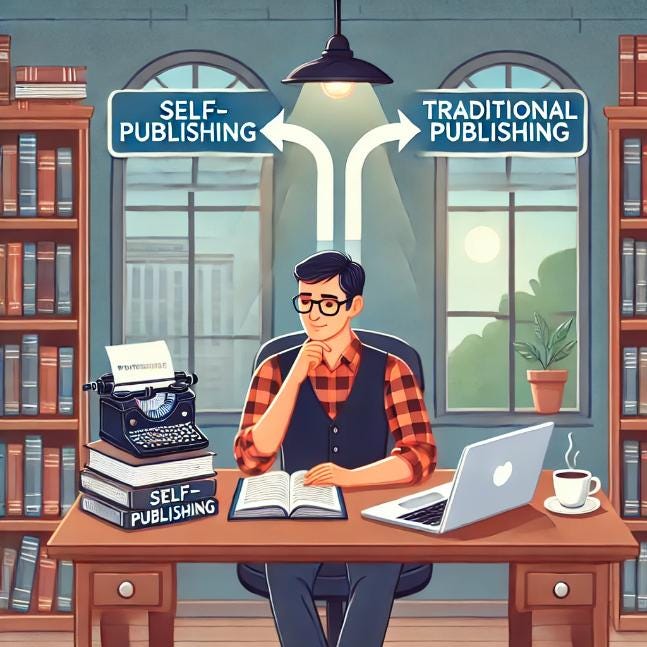
As an author who works for a book publishing company, has self-published, has been traditionally published, and has watched many writers struggle to figure out which path is best for them, I wanted to share a bit of what I’ve learned.
My own publishing path started with a children’s book based on my little dog, Mouse. I had always dreamed of becoming a published author, but at the time, I had no real idea how the publishing world worked. I submitted the book and proposal to several children’s publishers, received more than a few rejections, and heard nothing at all from others.
Instead of giving up, I started looking into self-publishing. That’s how Mouse the Pretty Bird came to life and became available on Amazon.
When I came close to finishing my meditation book, I learned how to write a proper proposal and submitted it once again. This time the rejections… were still rejections, but much more positive. Many said they saw promise in the book but were not currently accepting manuscripts in that genre, and some even suggested alternative publishers to submit to.
And then I got a yes! I signed a contract and became a traditionally published author.
So, Which Is Better?
What I’ve learned is that traditional publishing is not automatically more “legitimate,” and self-publishing is not automatically a fallback. They are different business models with different tradeoffs.
Publishing is not just about getting a book into the world. It’s also about understanding what you’re signing, what you’re giving up, what you’re gaining, and where the money is actually going.
I wish I had understood the differences between these paths earlier. Not because I made terrible choices, but because publishing can be confusing when you’re new to it. The language sounds official, the promises can sound exciting, and when you want your book in the world badly enough, it can be hard to tell the difference between an opportunity and a warning sign.
Start Here: What Do You Actually Want From This Book?
Before comparing options, ask yourself:
Do I want bookstore/library distribution, industry recognition, or mainstream media attention?
Do I want creative control?
Do I want speed?
Do I want to keep more royalties?
Do I want someone else handling editing, design, production, and distribution?
Do I have money to invest upfront?
Do I want this book to support a business, speaking career, coaching work, or personal legacy?
Am I prepared to market the book either way?
Your answers matter because there really isn’t one publishing path that is right for every author or every book.
Traditional Publishing: What It Is
Traditional publishing usually means a publishing house acquires your book, pays for production, and offers royalties. Some authors also receive an advance, though advances vary widely and are not guaranteed, especially with smaller presses or debut authors.
The publisher typically handles editing, cover design, interior layout, printing, distribution, and some level of marketing/publicity.
For most major publishers, including the “Big Five,” authors generally need a literary agent, especially for fiction, memoir, narrative nonfiction, and commercial nonfiction. Most major publishers and many of their imprints do not accept unsolicited submissions, although there are occasional exceptions and open submission periods.
Many reputable smaller publishing companies, however, will accept submissions without an agent.
Pros of Traditional Publishing
No author-funded production costs.
Potential advance payment.
Professional editing, cover design, layout, and production.
Better access to bookstore placement, libraries, trade reviews, and industry distribution.
A team is involved, so the author is not doing everything alone.
For some genres, especially commercial fiction and big nonfiction, this is still the clearest route to major national reach.
Cons of Traditional Publishing
Very slow timeline.
Hard to break into.
Rejection is part of the process.
Less creative control over title, cover, pricing, release timing, and sometimes marketing direction.
Royalties are generally lower than self-publishing.
The publisher may not provide as much marketing support as authors expect.
Contracts matter: rights, options, non-competes, royalty terms, and reversion clauses should be understood carefully.
What Surprised Me Most
One thing that surprised me was realizing that traditional publishing does not remove the author from the marketing process.
I think many of us imagine that once a publisher says yes, the machine takes over. And sometimes there is support, of course. But the author still matters. Your audience, your willingness to talk about the book, your platform, your energy, your connections—all of that still matters.
This is a BIG one to consider. Many authors assume that if they are traditionally published, all marketing will fall into the lap of the publisher.
That is not the case.
Traditional publishing does not mean you get to simply write the book and disappear. Most authors are still expected to help build an audience and promote their work.
Do You Need an Agent?
If your goal is one of the major traditional publishers or many of their larger imprints, you will generally need a literary agent.
Agents can help with:
Pitching your manuscript or proposal.
Knowing which editors might be a fit.
Negotiating contracts.
Protecting rights.
Understanding subsidiary rights, audio rights, foreign rights, film/TV rights, etc.
When You Might Not Need an Agent
You may not need one if:
You are submitting to small presses that accept direct submissions.
You are publishing poetry, regional nonfiction, academic work, or niche nonfiction through smaller publishers.
You are self-publishing.
You are working with a reputable hybrid publisher or publishing service and understand the contract.
Agent Red Flags
A reputable literary agent typically works on commission rather than charging an author upfront. Around 15 percent of what the author earns from a domestic publishing deal is standard. For foreign rights or other subsidiary rights involving subagents, the percentage may be closer to 20 percent.
Be cautious if:
An agent charges a reading fee to evaluate your work for possible representation.
An “agent” pushes you toward paid editing, paid publishing, or paid marketing services they profit from.
Someone guarantees publication.
Someone approaches you out of nowhere with excessive flattery.
You cannot verify the agent’s sales history.
You cannot find real clients, real books, real publishers, or other evidence of professional experience.
Self-Publishing: What It Is
Self-publishing was the first path I took, and honestly, I’m glad I did. I learned a lot by having to figure things out myself.
But I also learned that “easy to upload” does not mean “easy to publish well.”
Self-publishing means the author acts as the publisher. You control the project and either do the work yourself or hire professionals to help.
This can include:
Editing.
Proofreading.
Cover design.
Interior formatting.
ISBN setup.
Uploading to platforms.
Distribution.
Marketing.
Advertising.
Launch strategy.
Pros of Self-Publishing
Full creative control.
Faster timeline.
Higher royalty percentage.
You keep more rights.
You can update the book later.
You control pricing and promotions.
It can work especially well for niche books, memoirs, workbooks, business books, poetry, and books tied to an existing audience.
You are not waiting for permission.
Cons of Self-Publishing
You pay upfront for professional services.
You are responsible for quality control.
You must learn the business side.
Bookstore placement is harder.
Media/trade review access can be harder.
There is no built-in publishing team unless you hire one.
Marketing is entirely on you.
Poor editing, poor covers, or rushed production can hurt the book.
Self-publishing gives you freedom, but freedom also means responsibility.
You are not just the author. You are the publisher. You pay the production costs.
Hybrid Publishing and Vanity Publishing: The Confusing Middle
First off, I personally don’t love the term “vanity publishing,” but if you’re looking into publishing options, you’ll likely come across it.
Hybrid publishing can mean different things, and the term is not always used consistently. In general, a legitimate hybrid publisher asks the author to invest financially but should still provide professional editing, design, production, distribution support, transparent contracts, and some level of selectivity.
The Independent Book Publishers Association has established criteria for what it considers a reputable hybrid publisher, including transparency, professional standards, selective submissions, quality production, distribution, and clearly defined rights and royalties.
Hybrid publishing and vanity publishing are not exactly the same thing, though the terms can overlap in confusing ways.
A legitimate hybrid publisher should still care about the quality of the book and its potential readership. Vanity publishing, on the other hand, tends to make its money primarily from the author’s desire to be published rather than from selling books to readers.
That is why the question is not just:
“Is this hybrid?”
But:
“What am I paying for? What am I getting? Who owns the rights? And how does this company make its money?”
Vanity Publishing Warning
Vanity publishers often make money primarily from the author, not from selling books to readers.
Red flags can include:
They tell every author their book is amazing.
They claim to be selective but appear to accept almost everyone.
They charge thousands of dollars without clear deliverables.
They pressure you to sign quickly.
They promise bestseller status.
They guarantee bookstore placement.
They aggressively upsell marketing packages after you sign.
They use vague language like “global exposure” or “Hollywood potential.”
They cannot clearly explain their distribution.
They produce poor-quality covers, editing, or interiors.
They keep rights they do not appear to need.
They are unclear about royalties.
They make it difficult to leave or get your files or rights back.
One confusing area for authors is that some hybrid publishers may look or sound traditional.
For example, She Writes Press is a hybrid publisher whose books are distributed to the trade through Simon & Schuster. That does not mean Simon & Schuster is publishing those books; it means Simon & Schuster provides trade distribution.
This distinction matters.
If you submit to a publisher that appears traditional and they respond with an acceptance letter that includes upfront fees, pause.
That is not a traditional publishing contract.
It may be a hybrid offer, a paid publishing package, or something closer to vanity publishing. Whatever they call it, make sure you understand the model before signing.
Who Is Paying Whom?
This may be one of the simplest questions an author can ask.
Who is paying whom?
In traditional publishing, money flows from the publisher to the author through royalties and, sometimes, an advance. The author does not pay the publisher to produce the book.
In hybrid publishing, the author usually contributes financially upfront.
That does not automatically make it a scam, but it does mean the author needs to read the contract carefully and understand exactly what they are buying.
This is the part I wish every new author would read before signing anything, because writers are hopeful people.
We have to be.
But that hope can make us vulnerable when someone knows exactly what we want to hear.
Questions to Ask Before Signing Anything
Who is paying whom?
Who owns the rights?
Can I get my rights back?
What exactly is included?
What costs extra?
Who controls the cover, title, price, and release date?
Who receives royalties, and how often are they paid?
Can I buy author copies, and at what cost?
What happens if the book does not sell?
Am I being promised something realistic, or something emotionally tempting?
Scams to Watch Out For
Author scams have become increasingly sophisticated. Scammers may impersonate legitimate agents, editors, publishers, or production companies. They may create convincing websites and staff profiles or contact writers with highly personalized praise and promises of publishing, marketing, or film opportunities.
That makes verification more important than ever.
Traditional Publishing Scam Red Flags
A publisher asks you to pay to be traditionally published.
A supposed agent charges reading fees.
Someone guarantees acceptance by a publisher.
A company says they can “refer” you to a major publisher for a fee.
An agent or publisher requires you to buy editing services from a specific person or company in which they have a financial interest.
A publisher contacts you out of nowhere and acts as if your book has already been chosen.
They are vague about who they are, where they are located, or what books they have actually published.
Self-Publishing Scam Red Flags
Expensive packages with unclear services.
Fake or exaggerated marketing promises.
Guaranteed Amazon bestseller status.
Guaranteed reviews.
Paid “book-to-film” offers making unrealistic promises.
Fake agents, fake publishers, cloned websites, AI-generated or stolen staff profiles, or companies impersonating legitimate publishing houses.
High-pressure phone calls or emails.
Promises of bookstore placement without a realistic plan.
And honestly, that’s what makes these scams so awful.
They aren’t just selling services.
They’re preying on hope.
So Which Path Should You Choose?
Traditional publishing might be right for you if:
You want a shot at major bookstore distribution.
You are willing to wait.
You are comfortable querying agents.
You want an established team.
You are okay giving up some control.
You do not want to fund production yourself.
Your book fits a category publishers are currently looking for.
Self-publishing might be right for you if:
You want control.
You already have or want to build a direct audience.
You are writing for a specific niche.
You want the book out sooner.
You are willing to invest in quality.
You are comfortable learning business and marketing.
You want to retain rights.
Hybrid publishing might be right for you if:
You want help but also more control.
You have money to invest.
You understand exactly what you are paying for.
The publisher is transparent, selective, reputable, and contractually fair.
You have checked them carefully.
Hybrid is the area where I’d urge authors to be the most cautious, because the language can sound traditional while the money flows like vanity publishing.
Final Thoughts: Know What You Are Signing
No publishing path is perfect.
Traditional publishing can open doors, but it can also be slow and discouraging. Self-publishing can be empowering, but it requires work, money, and business sense. Hybrid publishing can be helpful in the right hands, but costly in the wrong ones.
And yes, there is a certain irony in reading an article from someone who works for a traditional publisher telling you that traditional publishing might not be the right choice for you.
But I believe authors deserve to understand their options.
The most important thing is to understand the model before you sign anything. Ask who is paying whom. Ask who owns the rights. Ask what happens if the book does not sell. Ask what services are actually included. Ask whether the promises being made are realistic.
Your book matters. So does your time, your money, your creative control, and your peace of mind.
A book isn’t automatically more legitimate because of the path it took to publication. What matters is the care, craft, honesty, and professionalism behind it.
If Self-Publishing Is the Right Path for You
Choosing to self-publish doesn’t mean you have to do every part of it yourself.
Genius Book Services works with authors who want professional help bringing a book into the world, from evaluating how the finished book will meet its readers to cover design, print layout, ebook formatting, and editing.
The goal is to figure out what your book actually needs before you spend more money fixing the wrong thing. In fact, the philosophy behind Genius Book Services is to figure out what your book actually needs before you spend more money fixing the wrong thing.
If self-publishing feels like the right path for your book, you can learn more about the services available through Genius Book Services.