

When many people hear the word meditation, they picture something very specific.
Someone sitting cross-legged. Eyes closed. Hands resting neatly on their knees. A silent room. A still body. Maybe a peaceful beach, a glowing light, or a mountain stream being visualized in the mind.
That version of meditation can be beautiful for some people. But it is not the only version.
And when it comes to children, it is often not the most realistic place to begin.
Children are not usually designed for long stretches of stillness and silence. Many of them wiggle. They hum. They ask questions. They get distracted. They need movement, touch, rhythm, play, and connection. That does not mean they cannot benefit from meditation. It simply means we may need to expand what we think meditation is supposed to look like.
I was reminded of this recently on a flight home from Mexico.
I sat next to a young woman who was on her way to work as a camp counselor for the summer. We started talking, and somehow the subject of meditation came up. I told her I had written a book about meditation and that I had been teaching my 9-year-old some simple breathing techniques for stress, overwhelm, and fear.
That led her to tell me about a little girl she had once cared for at camp.
The child was timid and withdrawn. She did not voluntarily join activities or play easily with the other children. At night, she was often scared. Her stomach hurt. She had nightmares. At the time, the counselor simply tried to soothe her fear and help with the physical symptoms. Looking back, though, she wondered if the little girl may have been struggling with anxiety.
Then she said something that stayed with me.
Even if she had recognized it as anxiety at the time, she would not have known what to do.
That conversation made me think about how often adults want to help children through big emotions, but do not always have simple tools to offer them. We may comfort them, distract them, reassure them, or try to reason with them. Sometimes that helps. Sometimes it does not.
But what if children were also taught how to return to their own breath?
Not in a heavy, formal, overly serious way, but as something gentle, playful, and always available. Because children already have natural meditative moments.
They watch bugs.
They pet animals.
They listen to rain.
They color.
They sway.
They hum.
They collect rocks.
They notice clouds.
They feel grass under their feet.
They cuddle a stuffed animal.
Meditation for children is not about teaching them something completely new. Sometimes it is about helping them recognize the quiet, grounding moments they are already drawn to.
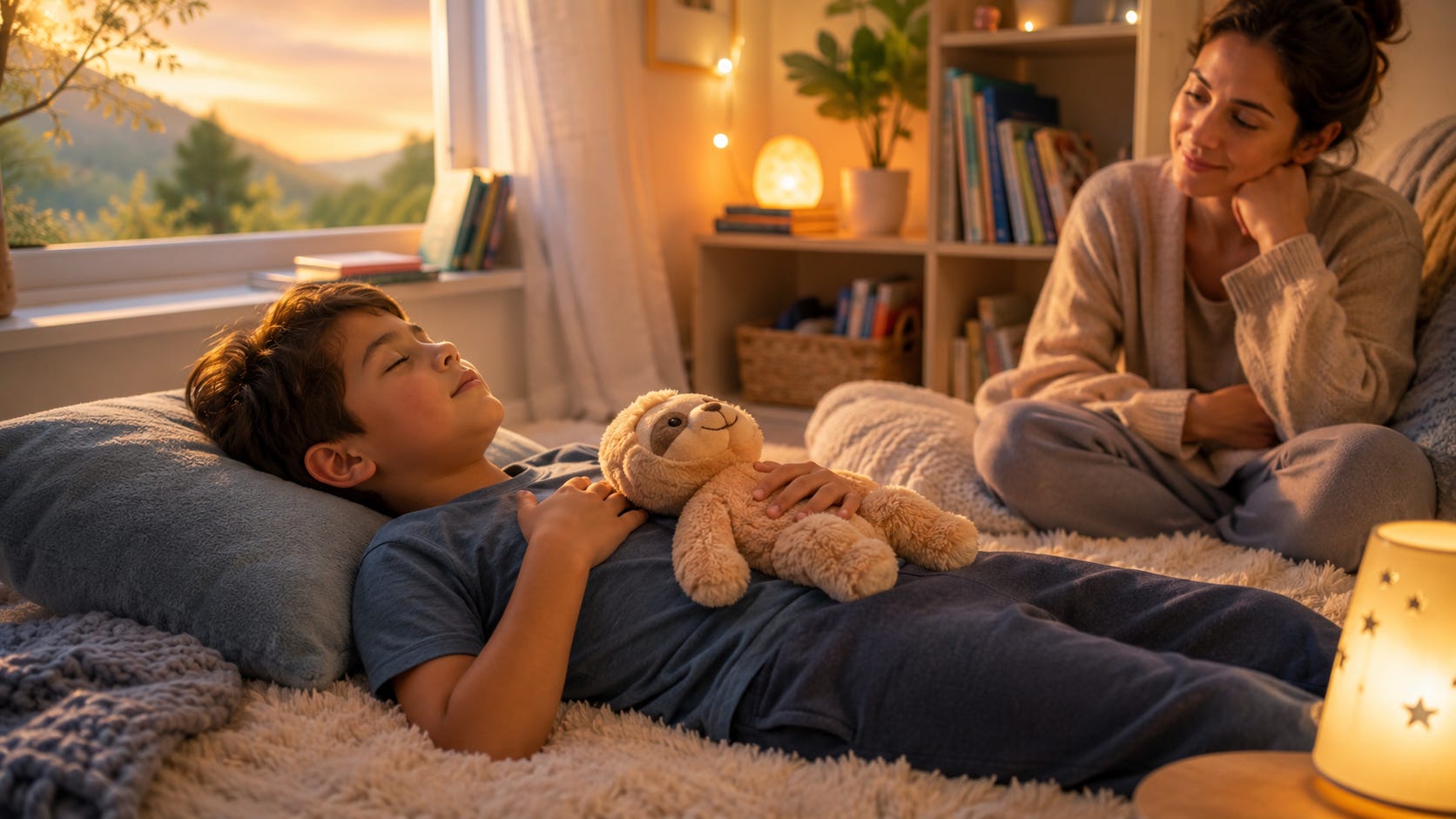
A child lying on the floor with a stuffed animal on their belly, watching it rise and fall with each breath, is practicing awareness.
A child slowly tracing their fingers along the edge of a leaf is practicing presence.
A child listening to rain at bedtime is experiencing a mindful moment.
A child taking one deep breath before answering, crying, yelling, or shutting down is learning that there can be a pause between feeling and reacting.
That pause matters.
Children, like adults, experience stress, frustration, sadness, fear, embarrassment, overstimulation, disappointment, and anger. They do not always have the words for those feelings. They do not always understand what is happening inside their bodies. Big emotions can feel frightening when no one has taught them how to sit with what they feel.
Simple breathing practices can give children a calm place to land. Not as a way to shut emotions down, and not as a way to force them to be quiet.
Not as a replacement for comfort, connection, therapy, medical care, or adult support when those things are needed.
But as one small tool in their emotional toolbox.
And the breath is a particularly powerful tool because it is always with them.
A parent, grandparent, teacher, counselor, or caregiver cannot be beside a child every moment of the day. But the child’s breath is there before a test, after a nightmare, during conflict, in a new environment, or when the world simply feels too loud.
A simple practice to try: Stuffed Animal Breathing
Have the child lie down and place a favorite stuffed animal on their belly. Instead of making it serious, make it playful.
You might say, “Let’s give Teddy a ride on your belly,” and then invite the child to breathe slowly enough that the stuffed animal gently rises and falls.
That is it.
No perfect posture.
No forced silence.
No need to visualize anything.
No pressure to meditate for twenty minutes.
Even one or two minutes can help a child begin to notice their body, their breath, and the possibility of softening when they feel tense or overwhelmed.
Different children will connect with different practices, just like adults do. Some need quiet. Some need movement. Some need sound. Some need touch. Some need imagination. Some need a candle, a blanket, a stuffed animal, a song, a walk, or a hand to hold.
And some simply need a calm adult sitting nearby, showing them through presence that they are safe.
That presence can be its own kind of meditation. Meditation does not have to look one specific way to be meaningful. For a child, it might look like breathing with a teddy bear.
And sometimes, that is enough.
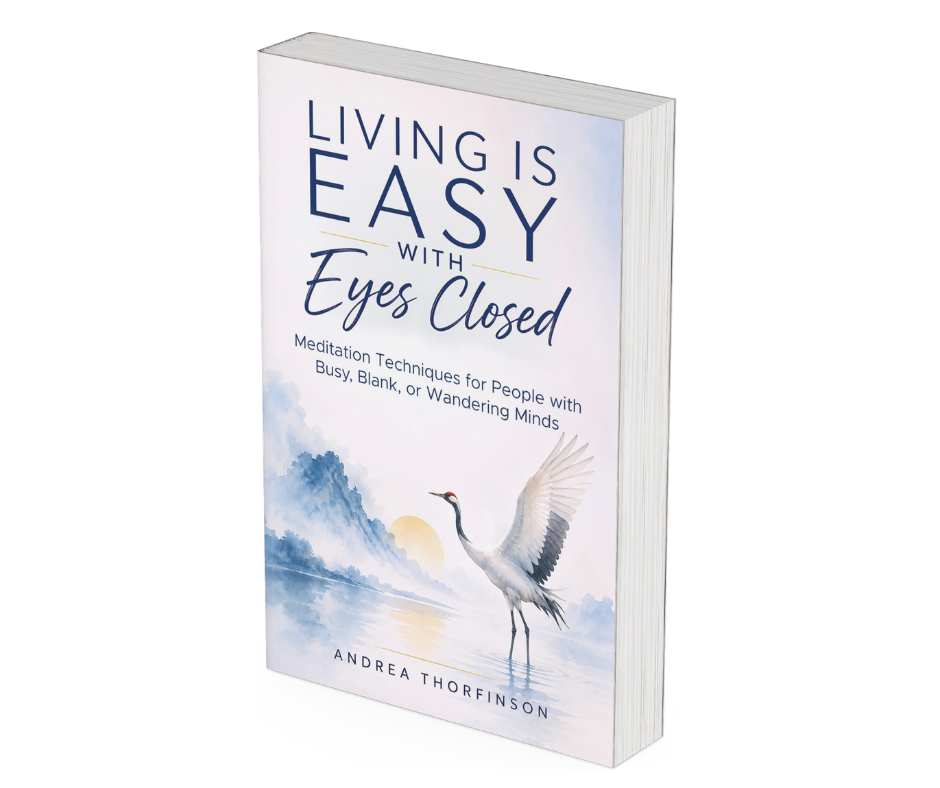
And for the adults, if meditation has ever felt difficult, awkward, or inaccessible to you, Living Is Easy With Eyes Closed offers a gentle, practical approach for busy minds, non-visualizers, and anyone who needs meditation to feel a little more human.
It is available now from Genius Book Publishing.
Great post, I don't think many of us stop to think how helpful something like this could be to children who often struggle with anxiety and overwhelm.