

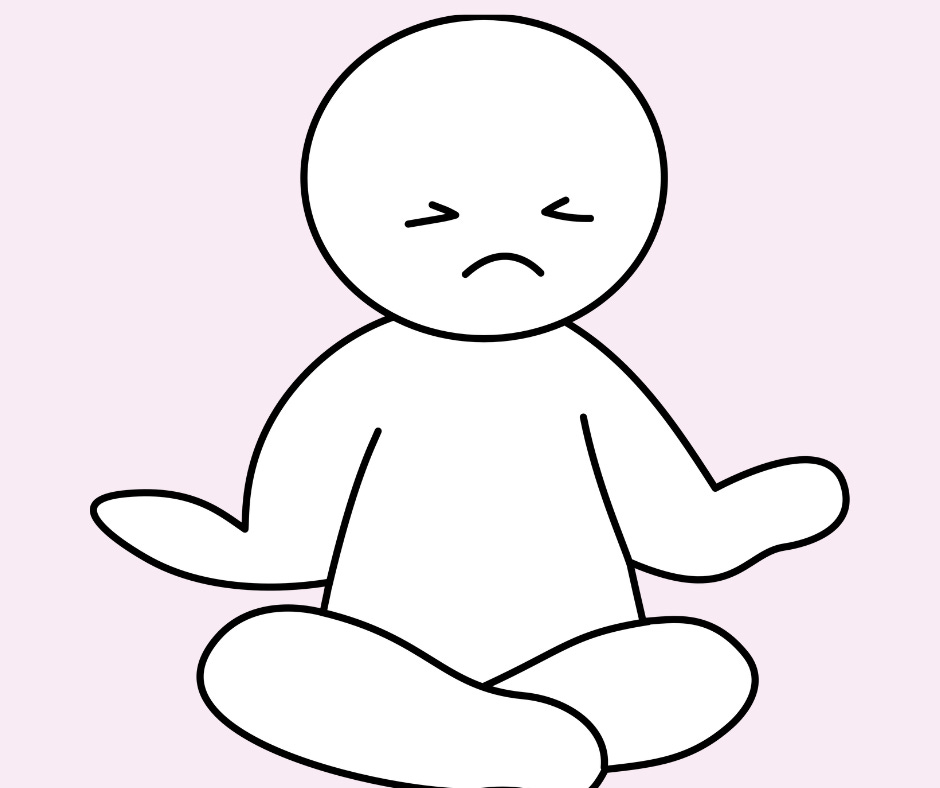
Meditation Isn’t Always Calm (And That’s Not a Problem)
When people first try meditation, they often expect stillness, silence, and immediate calm.
But for many, the opposite happens.
The mind gets louder, the body gets restless, small sensations—an itch, the need to swallow, a shifting discomfort—suddenly feel impossible to ignore.
This isn’t failure.
It’s your nervous system reacting.
If you’re used to constant motion—thinking, doing, staying alert—then stillness can feel unfamiliar. Even unsafe. The body tries to pull you back to what it knows through restlessness, urges, or distraction.
Over time, though, something shifts. As your system learns that nothing is wrong, those sensations begin to settle.
Myth #5: Meditation Should Feel Relaxing
We’ve been taught that meditation is supposed to feel peaceful and easy.
But relaxation is a side effect, not the goal.
The real practice is learning to notice what’s happening, thoughts, emotions, physical sensations, without immediately trying to change or escape them.
And when you get quiet, what you’ve been avoiding often rises to the surface.
Old memories
Anxiety in the body
Emotional tension you didn’t realize you were holding
This can feel uncomfortable at first, but it doesn’t mean something is wrong. It means something is finally being noticed.
Myth #6: If It’s Not Calm, You’re Doing It Wrong
Meditation isn’t about forcing calm. It’s about allowing what’s there… and not fighting it.
That might look like:
Noticing a thought without following it
Feeling an emotion without immediately trying to fix it
Sitting with discomfort for a few breaths longer than you normally would
Over time, this changes your relationship to your thoughts.
They don’t disappear, but they no longer pull you in the same way.
You start to recognize them:
“That’s anxiety.”
“That’s a memory.”
“That’s just a thought.”
And instead of getting caught in them, you begin to let them pass.
What Actually Changes
With consistent practice, things begin to soften. Not all at once, but gradually.
The mind becomes less reactive. Emotions feel less overwhelming. And moments of calm begin to appear, first in meditation, then in everyday life.
Sometimes meditation feels peaceful.
Sometimes it feels uncomfortable.
Both are part of the process.
Closing
If meditation doesn’t feel calm… or easy… or even good sometimes—
It doesn’t mean it isn’t working. It might mean it finally is.
This is exactly what I explore in Living Is Easy With Eyes Closed, making meditation accessible for real, everyday minds.
