

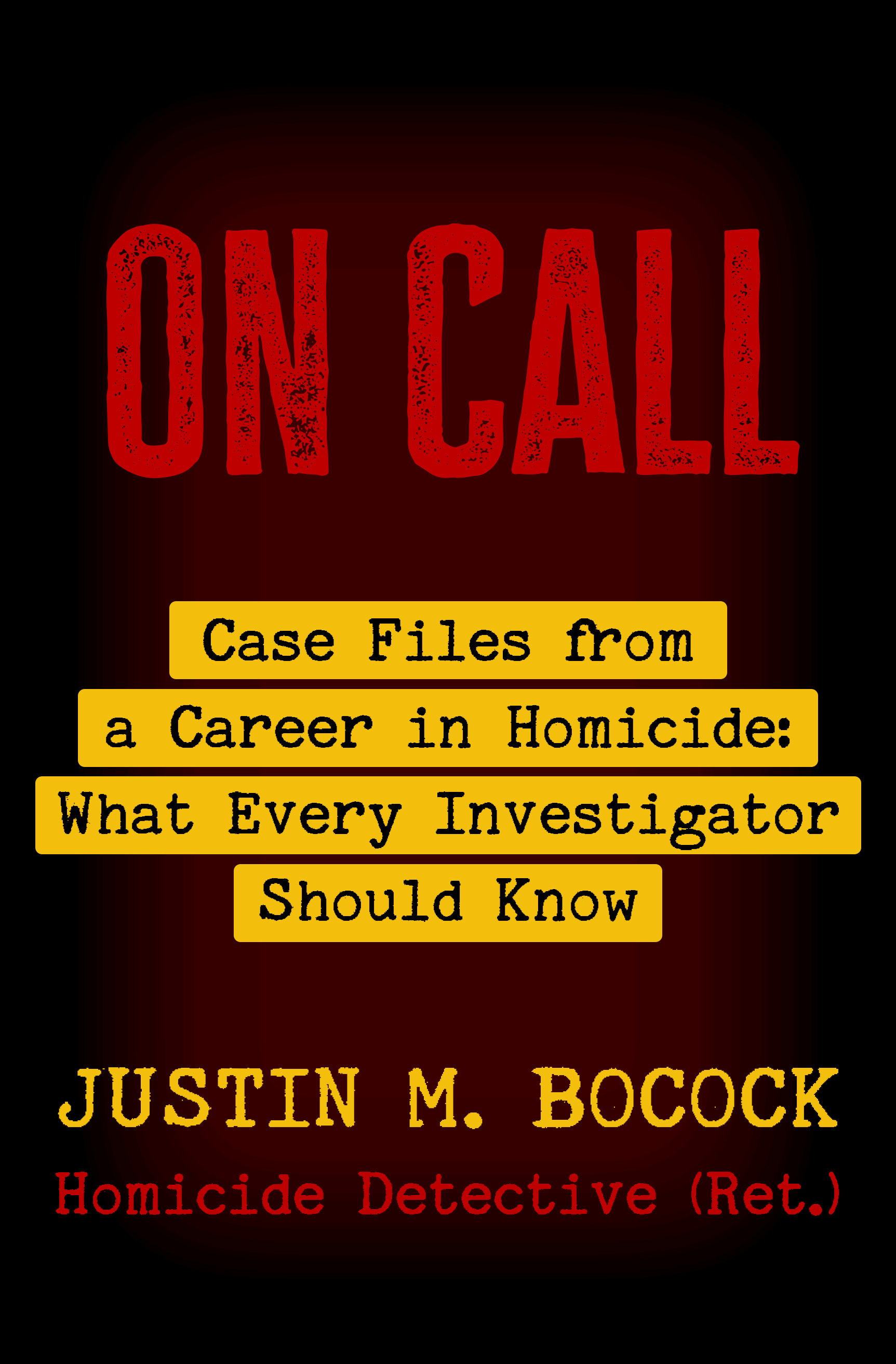
It’s the holiday season, and this time of year I always think about the many victims I [Justin Bocock] had the privilege of representing during my police career. I still remember their names, and when I close my eyes, I can see their faces. My experience with crime is very different from that of mainstream society, and I’m reminded of that most when I see how suspects are portrayed in news media and entertainment. In my book, On Call: Case Files from a Career in Homicide, I introduce readers to thirteen victims and the investigations into their murders.
At the beginning of a homicide investigation, the victim is the center of attention. Starting with the victim and working outward is a proven method for identifying the person or persons responsible for the crime. However, once a suspect is identified, law enforcement naturally redirects its attention away from the victim and toward the suspect. The primary objective becomes locating, arresting, and building a case against that individual. Almost all investigative resources, intelligence efforts, and manpower shift to the suspect’s background, criminal history, and known locations.
Once the suspect is apprehended, the investigative team often shrinks to a few detectives and, if the agency has the resources, an analyst. Their goal is to assemble a case the district attorney will accept and charge in court. The team searches for motive, reviews the suspect’s communications and movements, and examines the suspect’s associations. I intentionally use the word suspect repeatedly because the focus truly does shift to them. Law enforcement must prove the suspect committed the crime, not simply that the victim was harmed.
When the case is filed with the courts and the suspect is officially charged, their title changes to defendant. The case becomes State vs. [Defendant’s Name], for example, State vs. Bill Smith. Referring to the case this way is practical, as every related document carries that title. As prosecutors prepare for trial, they evaluate the significance of physical evidence, witness testimony, and any legally admissible information that proves the defendant committed the crime. The victim is always in the minds of prosecutors and detectives, but the burden is to prove guilt beyond a reasonable doubt.
The defendant’s attorneys, meanwhile, focus on their client’s mental health, addictions, or any factor that may challenge the state’s evidence. Their duty is to ethically and vigorously represent their client’s interests in court. This is not a criticism; this is their job.
When detectives discuss a case, we often refer to it by the defendant’s last name, like “The Smith case.” As a detective who has testified in dozens of homicide trials, including capital murder cases, my preparation for court always centers on the investigative actions that produced evidence against the defendant. My testimony focuses on what proves the defendant committed the crime. Rarely, if ever, am I questioned in detail about the victim.
In the capital murder (death penalty) case I testified in, the guilt phase lasted two weeks. Once the jury found the defendant guilty, the mitigation phase began. Over the next three months, the court focused on how a death sentence would affect the defendant. The jury learned about his elementary school grades, his upbringing, his undiagnosed childhood mental illnesses, and even his alleged PTSD diagnosed as being induced by the murder he committed. Defense experts and witnesses testified about how the defendant would no longer be able to see his children if sentenced to death. The court’s focus was on the defendant’s well-being and quality of life.
The courts are designed to protect the rights of the defendant. Over the years, however, that protection has evolved into a broader social sympathy for individuals who victimized others and disregarded societal norms until the moment they were caught. Once arrested, many defendants start reflecting on the harm they caused their friends and families. Some show remorse whether genuine or self-serving. But once convicted and sentenced, many revert to seeing themselves as victims of their own circumstances.
I have listened to hours of prison phone calls where inmates complain to family members about not having enough money in their commissary accounts to cover gambling debts or luxuries purchased on credit from other inmates. I understand that prison life is difficult but so is every holiday spent without a murdered loved one. I know victims’ families would give every dollar they have just to share one final phone call with the person they lost.
As a retired homicide detective, I do not lose sleep thinking about a defendant’s prison life. I lose sleep thinking about the victims I never got to meet while they were alive. I would have loved to have met them.
Remember the victims.
--
Justin M. Bocock
Having lived the same life for 10 years, this is spot on! Being a homicide detective isn't what people think it is. It's hard work that's often thankless. If you are successful, that work will go under the microscope of prosecutors, defense attorneys, courts, your own department, juries, and possibly the media. Thank you for your service and I now need to get this book. I look forward to reading it.