

In this latest installment of Beyond Baker Street, David Foster explores the shadowy world of Dr. Fu Manchu—the notorious pulp villain whose sinister brilliance rivaled even Sherlock Holmes himself. From Sax Rohmer’s racially charged origins to modern pastiches, crossovers, and cultural reinterpretations, The Lord of Strange Deaths reveals how this once-iconic character came to symbolize both early 20th-century intrigue and enduring controversy.
Beyond Baker Street IV
The Lord of Strange Deaths
An Introduction to Fu Manchu
Dr. Fu Manchu, the sinister creation of Sax Rohmer (the pen name of Arthur Henry Sarsfield Ward), is one of the most enduring and controversial figures in the annals of pulp fiction. First appearing in the short story, The Zayat Kiss (1912)—which was collected with nine further stories into the novel The Mystery of Dr. Fu-Manchu (1913)—the character is depicted as a brilliant but ruthless mastermind bent on world domination. Rohmer, inspired by the era’s fascination with the Yellow Peril, crafted Fu Manchu as the embodiment of Western fears about the East—a portrayal that would later draw significant criticism for its racial and colonial overtones.
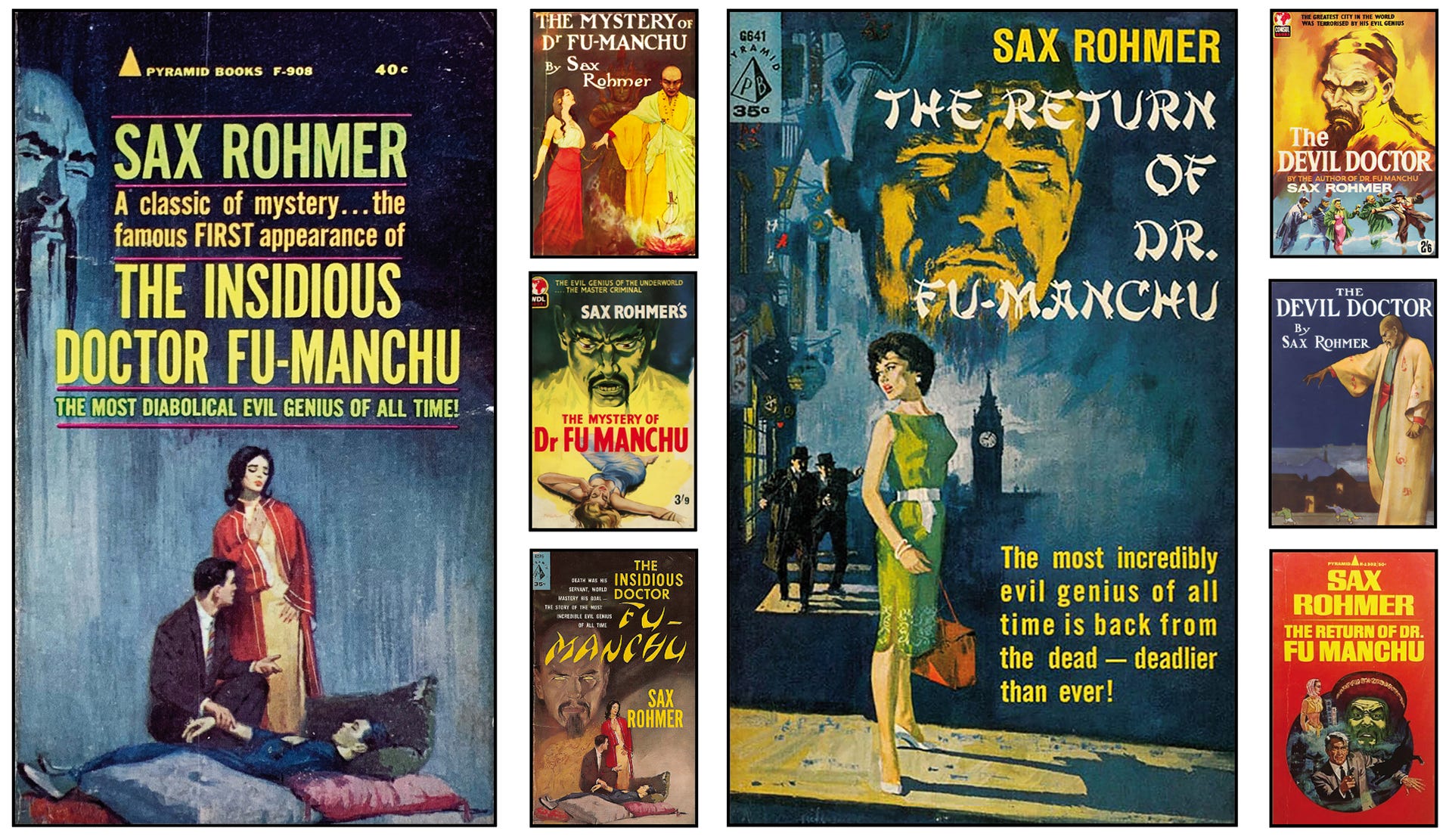
The stories centre around Fu Manchu’s confrontations with Sir Denis Nayland Smith of Scotland Yard and his loyal companion, Dr. Petrie. In structure and tone, the early tales mirror Arthur Conan Doyle’s Sherlock Holmes adventures, with Nayland Smith playing the role of the tenacious detective and Dr. Petrie narrating the action as the loyal chronicler. Much like Dr. Watson, Petrie provides an everyman perspective, grounding the fantastical plots in relatable terms.
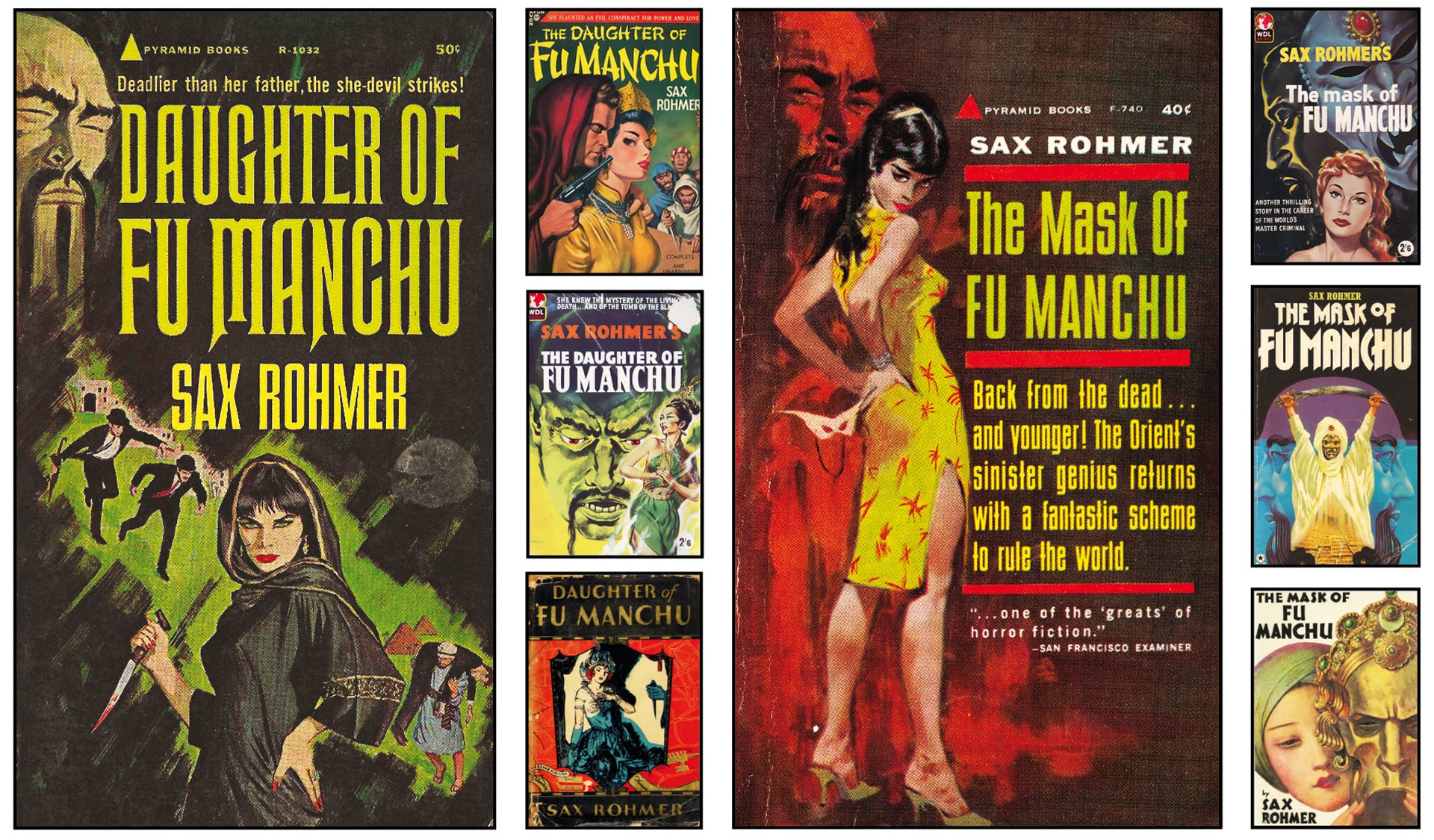
Fu Manchu’s influence extended beyond literature into film and television, where the character was adapted numerous times. In Paramount on Parade (1930), Warner Oland’s Fu Manchu appeared alongside Clive Brook’s Sherlock Holmes in a short comedic skit, signalling the two iconic characters’ shared cultural space—albeit on different sides of the law.
Later, in Cay Van Ash’s novel Ten Years Beyond Baker Street (1984), Sherlock Holmes directly crosses swords with Fu Manchu, stepping in for Nayland Smith to unravel one of the doctor’s nefarious plots.
Cay Van Ash (1918–1994) was an English writer and scholar best known for his contributions to the legacy of Sax Rohmer. Van Ash co-authored Master of Villainy (1972), a biography of Rohmer, with Rohmer’s widow, Elizabeth.
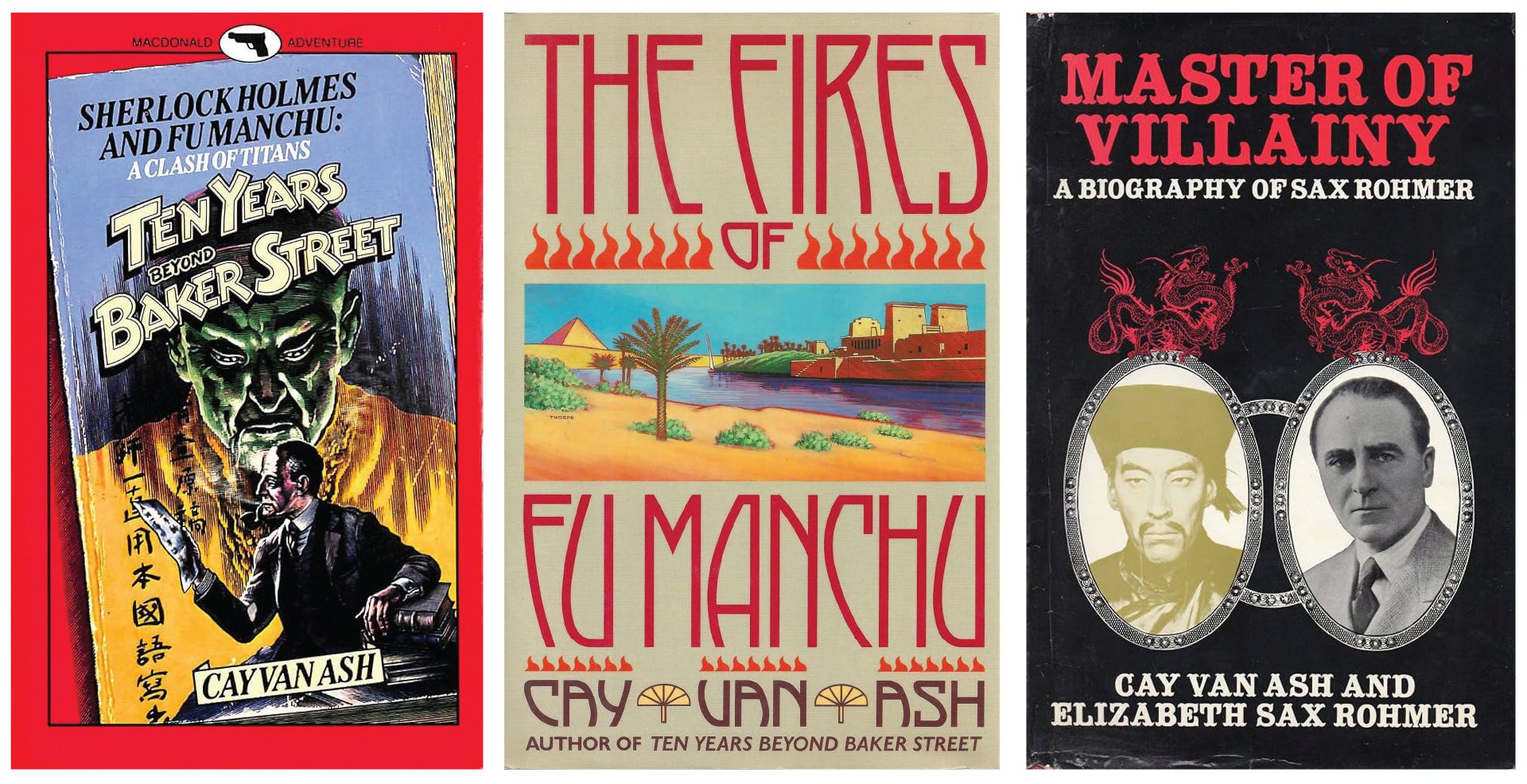
Later, Van Ash was licensed by the Rohmer estate to write several Fu Manchu continuation novels. The first, and most successful, was Ten Years Beyond Baker Street. A second novel, The Fires of Fu Manchu, set in 1917 in Egypt, was published in 1987. And a third novel, The Seal of Fu Manchu, was announced in 1988, however the manuscript was unfinished at the time of Van Ash’s death.
“You can read my thoughts on Ten Years Beyond Baker Street in 52 Weeks, 52 Sherlock Holmes Novels— a multi-personal look at fifty-two of the best Sherlockian pastiches—edited and collated by Paul Bishop.”

Sherlock Holmes and Fu Manchu also appear in thinly veiled forms (as Enoch Bone and The Mandarin) in Gahan Wilson’s satirical detective novel Everybody’s Favorite Duck (1988).
A character known only as The Lord of Strange Deaths—one of Fu Manchu’s nom de guerres—appeared in the Sherlock Holmes pastiche, The Albino’s Treasure (2015) by Stuart Douglas. The Lord of Strange Deaths also appeared in Kim Newman’s Anno Dracula (1992) and the graphic novel, Anno Dracula 1895: Seven Days in Mayhem.
To avoid copyright issues, a character called simply “The Doctor” made several appearances in the Homes inspired Solar Pons adventures by August Derleth, and later, Basil Copper.
“The Doctor” also appeared in Alan Moore’s The League of Extraordinary Gentlemen, Volume One (1999–2000). The Doctor is allegedly killed in the climactic battle with Professor Moriarty.
While Fu Manchu has long been a staple of adventure fiction and an archetype of the diabolical genius, the character’s popularity has waned in recent years. This decline reflects a broader reckoning with the racism and colonialist ideology inherent in the stories. Modern audiences increasingly reject such stereotypes, recognizing them as harmful and outdated. As a result, Fu Manchu now serves more as a historical artifact—illustrating both the allure of the exotic in early 20th-century popular fiction and the prejudices of the era—than as a character who resonates with contemporary sensibilities.
Beyond Baker Street
I’ve always been fascinated by the shadow cast by Sherlock Holmes—a figure so iconic that his influence seeps into unexpected corners of pop culture. Beyond Baker Street is where I chase those echoes. Whether it’s a villain who once faced Holmes or a story that feels like it should’ve, this series lets me explore the strange tributaries that flow from the great detective’s world.
If you’ve enjoyed this piece, you’ll find even more to explore in my book Baker Street: The Curious Case Files of Sherlock Holmes—a deep dive into 100+ years of Sherlock Holmes in print, film, television, and beyond. From Conan Doyle’s original stories to pastiches, parodies, and pop culture echoes, it’s a must-read for Holmes fans and curious minds alike.

Yours in the Spirit of Adventure
David Foster is an Australian best-selling author who writes under the pen names James Hopwood, A.W. Hart, and Jack Tunney. Under the latter, he has contributed three titles to the popular Fight Card series. His short fiction has been published in over 50 publications worldwide, including by Clan Destine Press, Wolfpack Publishing, and Pro Se Productions, to name but a few. In 2015, he contributed to the multi-award-winning anthology Legends of New Pulp Fiction, published by Airship 27 Publishing.
Foster’s non-fiction work appeared in the award-winning Crime Factory Magazine, as well as contributing numerous articles exploring pulp fiction in popular culture to Girl Gangs, Biker Boys, and Real Cool Cats: Pulp Fiction and Youth Culture, 1950 to 1980 (2017, PM Press) and Sticking It to The Man: Revolution and Counterculture in Pulp and Popular Fiction, 1950 to 1980 (2019, PM Press). He has also contributed articles on the ANZAC war experience to Remembrance (2024, Union Street 21).
Foster lives in the old Pentridge Prison Complex, behind high grey stone walls, in inner-suburban Melbourne, Australia.
Get Baker Street Today
