We didn’t go to the moon for the moon. And Dylan didn’t write songs just to be heard. This piece reflects on what happens when one person reaches somewhere extraordinary and the rest of us follow in our own way.
Bob Dylan - Seeking Mirth and Beauty
“That big fat moon, is gonna shine like a spoon”
(As I post this, a spaceship is racing toward the moon with four people aboard)
A line in a Dylan song suggested once that the first step in inventing our doom was touching the moon. Maybe and maybe not. I do know this though. We build rockets to take us to the moon, and those rockets are an incredible accomplishment. They are a wonderful testament to the ingenuity and technical skills and imagination of humans. But a rocket is not that thing we want to have. The rocket is not the great achievement. A rocket is just a tool that we make to get us a greater prize. Rockets are not the goal. We didn’t want great tools. We wanted to get to the moon. And we can go a step beyond even that in our thinking here—because we didn’t even really want to go the moon. NASA scientists were pretty confident that there wasn’t going to be much there. And Neil Armstrong proved them right. What we wanted to see is what it feels like to be a human being on the moon. What does it feel like to be a human here on earth and to know that we have put a man on the moon. What would be the effect? That’s what we wanted to know. And we didn’t do that so that just one person would know what it feels like to be able to go to the moon. We weren’t doing this for Neil Armstrong. We all wanted to know, in an articulate way, just what it feels like to know humans could get to the moon, but we didn’t all have to go in order to establish that particular array of cells in our brains. When Neil Armstrong got there, to some extent we all got there. He made a template of knowing and I laid that template across a small area of my brain and then I had something of what he had. And it was worth it. A picture is worth a thousand words—and we got both. He brought back words and pictures. We got the knowledge that we could do that. And we got a big bag of moon rocks.
“One small step for man, one giant leap for all mankind,” wasn’t just graceful eloquence. That was us standing there in an inch of moon dust, and that first step we took on the surface of the moon threw open wide the doors of our perception.
In the same way, Dylan writes those songs and delivers them by way of his forceful will and talent, providing for us the tools we need so that we can all see and feel that place within— “that hollow place where martyrs weep and angels play with sin.” Because if just one person can get there, to where Dylan got, or to where Neil Armstrong got, or even to where Jackson Pollock got with his flung house paints, then we can all get there—and be there. And some of us have done just that.
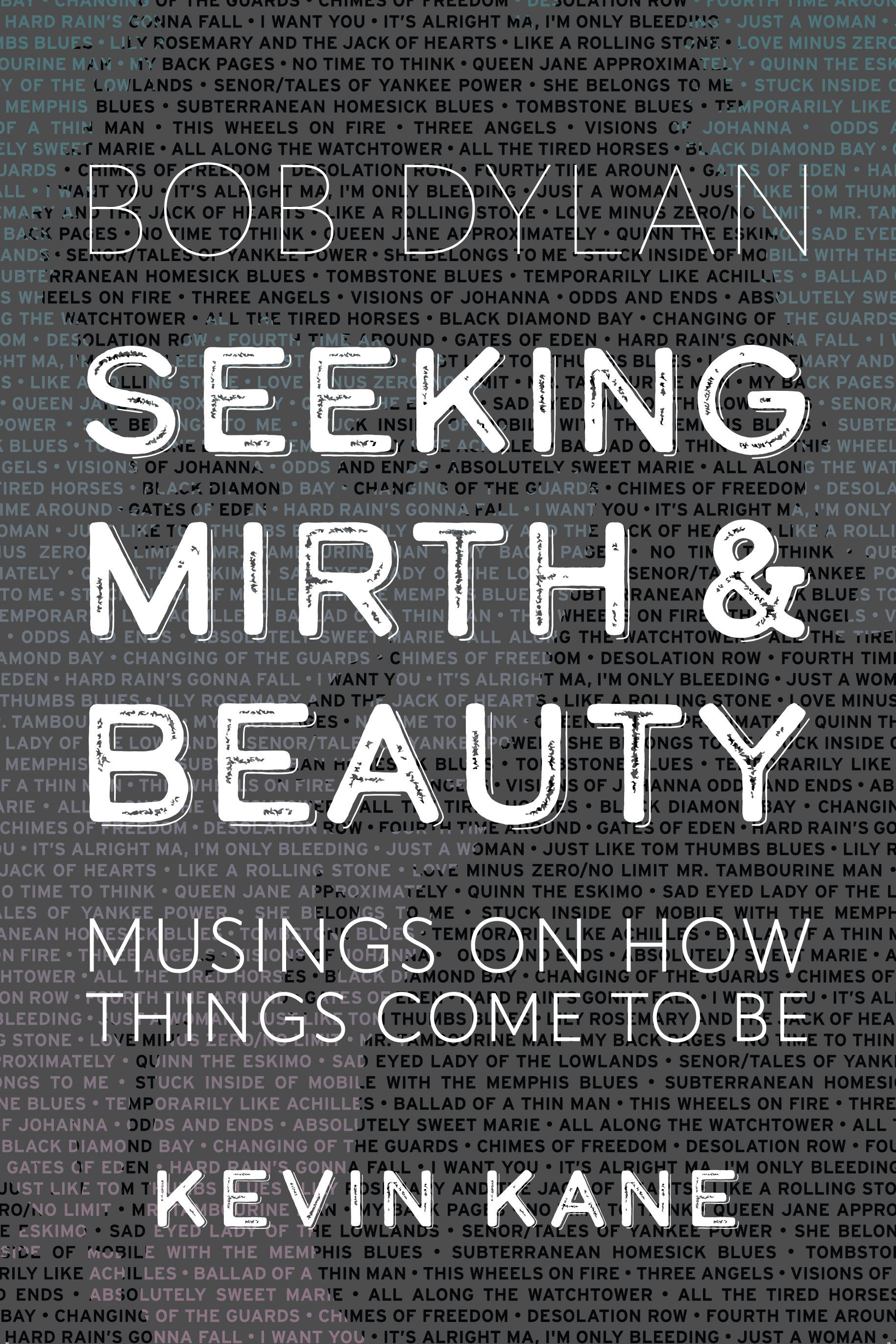
Seeking Mirth and Beauty is the title of a new book about songs and art, centering on the songs of Bob Dylan, from which this essay is lifted.
Discover more reflections like this in Seeking Mirth and Beauty.